
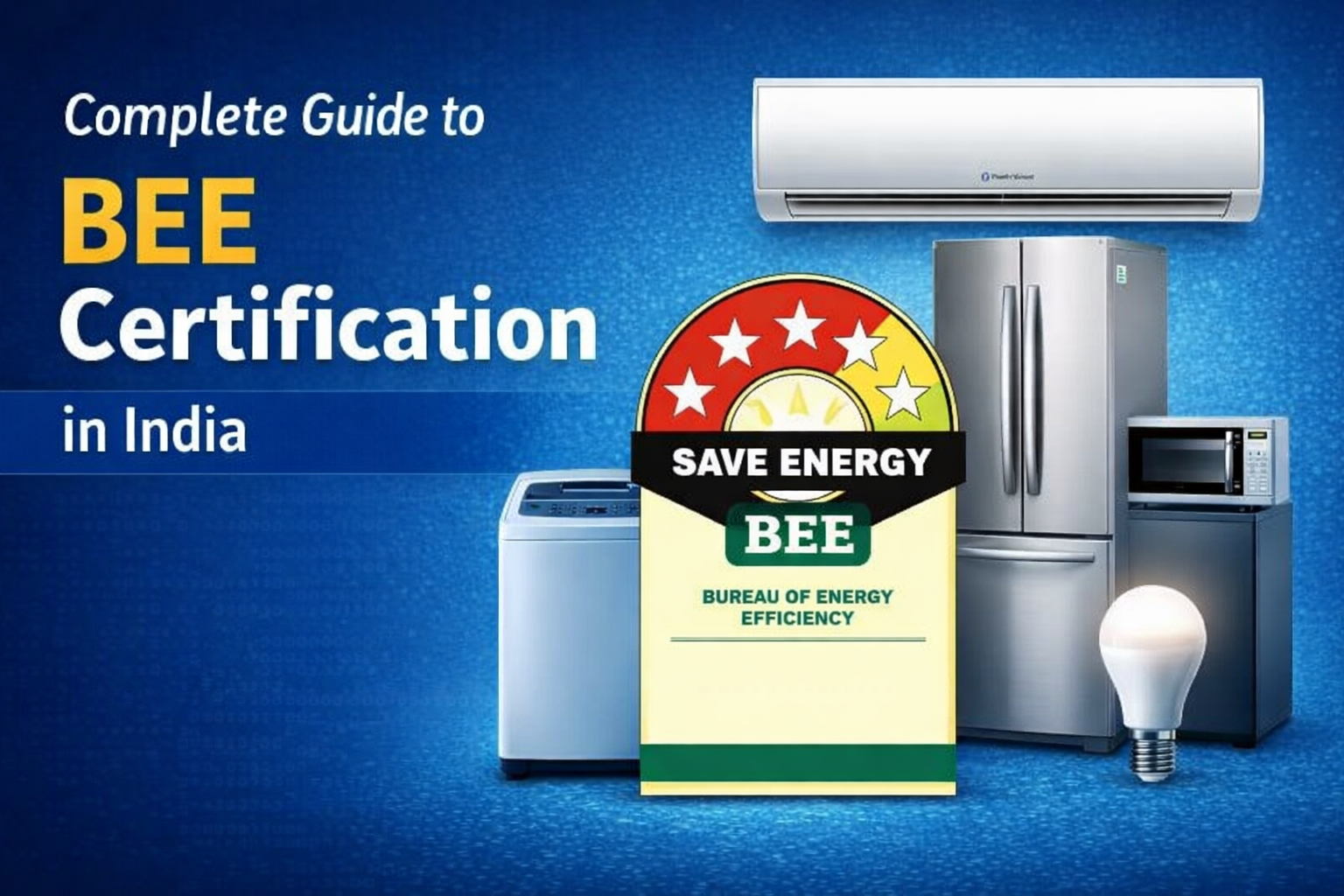
Complete Guide to BEE Certification in India
In today’s energy-conscious world, efficiency is not just a preference — it is a necessity. To promote energy savings and reduce electricity consumption, the Government of India introduced BEE Certification for various electrical appliances. If you are a manufacturer or importer of electrical products, understanding BEE compliance is essential before entering the Indian market.
This blog explains everything you need to know about BEE Certification — its importance, process, documents, and benefits.
What is BEE Certification?
BEE (Bureau of Energy Efficiency) Certification is an energy efficiency compliance issued by the Bureau of Energy Efficiency (BEE) under the Ministry of Power, Government of India.
BEE certification ensures that electrical appliances meet prescribed energy consumption standards and are labeled with a Star Rating (1 Star to 5 Star).
The more stars a product has, the more energy-efficient it is.
What is the BEE Star Label?
The BEE Star Label provides information about:
- Energy efficiency level
- Annual energy consumption
- Brand and model details
- Certification validity
A 5-star rated appliance consumes less electricity compared to a 1-star rated appliance, helping consumers reduce electricity bills and environmental impact.
Why is BEE Certification Important?
BEE certification is important because it:
- Ensures energy efficiency compliance
- Is mandatory for notified products
- Builds consumer trust
- Enhances product marketability
- Helps reduce electricity consumption nationwide
- Supports environmental sustainability
For products under the mandatory list, selling without BEE certification is not legally permitted.
Products Covered Under BEE Certification
BEE certification applies to several electrical appliances, including:
- Air Conditioners
- Refrigerators
- LED Lamps
- Ceiling Fans
- Water Heaters (Geysers)
- Television Sets
- Washing Machines
- Distribution Transformers
- Electric Motors
Some products fall under Mandatory Labeling, while others may be under Voluntary Labeling.
Who Needs BEE Certification?
- Manufacturers
- Importers
- Brand Owners
Both Indian and foreign manufacturers must comply if their product category is listed under BEE guidelines.
Documents Required for BEE Registration
- BIS License (if applicable)
- Product Test Report from NABL Accredited Laboratory
- Technical Specifications
- Brand Authorization Letter
- Company Incorporation Documents
- Trademark Certificate (if applicable)
BEE Certification Process
Step 1: Product Testing
The product is tested in a NABL-accredited laboratory to determine energy consumption.
Step 2: Document Preparation
All technical and compliance documents are compiled.
Step 3: Online Application Filing
Application is submitted on the BEE portal.
Step 4: Scrutiny & Approval
BEE reviews the application and test reports.
Step 5: Star Label Allotment
Upon approval, the product is granted a star rating label.
Validity of BEE Certification
BEE certification is generally valid for a specific period as notified by BEE. Renewal is required before expiry to maintain compliance.
Benefits of BEE Certification for Businesses
- Competitive advantage in the market
- Increased product credibility
- Better acceptance in government tenders
- Improved brand image
- Compliance with Indian energy regulations
Conclusion
BEE Certification plays a crucial role in promoting energy efficiency and protecting consumers. For manufacturers and importers, compliance is not just a legal requirement but also a strategic advantage. Proper testing, documentation, and timely application ensure smooth approval and uninterrupted sales in the Indian market.
If you are planning to launch energy-efficient appliances in India, obtaining BEE certification should be your first step toward regulatory compliance and market success.